
How to Use RSI for Intraday, Swing, and Long Positional Trading
Category : Technical Analysis Posting Date July 26, 2025 || Updated Date August 01, 2025
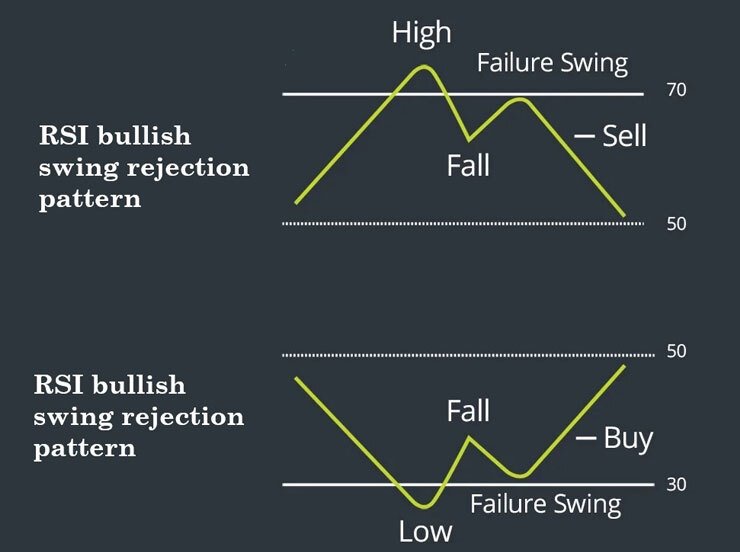
The Relative Strength Index, or RSI, is one of the easiest and yet effective tools to gather information on the market. It is the first choice for most of the traders.
Wilder, J. W. developed the RSI and explained that the commoditiy and or the market price should have previously went under a certain price level in order for it to be termed as oversold or bought.
Scalping, swing trading, or long term RSI adaptations and preference settings best. Scalping, swing trading, or long term investing all require adaptations in your settings to fit.
Trading techniques have been explained in a simpler manner to help all traders and investors.
Let me first recap some als of Relative Strength Index, and add some details.
The RSI is an oscillator that is calculated on the price of an asset.
Formula or rules to calculate it:
RSI > 70 => long term price level is termed as overbought and trading shall happen below it.
RSI < 30=> long-term price level is revisited as oversold and predicted to surge in price.
The RSI defaults to “Period 14” of the closing candles, meaning 14 candles for the RSI's time frame in use.
_side note, there is a lot a trader can do to ''unlock'' the full potential of the RSI from trading style to settings_
Let’s start from the top and talk about intraday trading.
Goal is to capture a price movement. Avoid sideways traps.
Recommended settings:
RSI period: 14 or 21 (smoother, less jitter)
Timeframe: Weekly chart
How to use:RSI crossing above 50 means long term momentum turning bullish
RSI falling below 50 means momentum turning bearish
Look for:
Long-term bullish divergence means price makes lower lows while RSI makes higher lows suggesting possible trend reversal
In strong bull markets, RSI above 70 can remain elevated for long periods; don’t exit too soon. A better strategy is to wait for the RSI slope or cross below 70 before exiting.
Extra advice:
Combine with stalking fundamentals or macro trend
Use alongside weekly moving averages or trendlines for RSI
Focus on long-term investments instead of trying to time the market for every small, short-term move.
Example:Weekly RSI crosses above 50 after months of being below: long positions can be added gradually.
Final thoughts: One tool, many strategies
RSI is versatile:
Intraday, faster RSI (7-9) for small moves.
Swing, Standard RSI 14 on daily chart with divergence.
Long term, smoother RSI (14-21) on weekly chart to follow broader movements.
No one-setting-for-all-styles applies with RSI.
As with any technical, avoid relying solely on the RSI. Always use price action, support and resistance, and risk management when trading.
RSI is simple, but when used intelligently, it can be one of the most effective tools in your trading kit.

Scores SEBI Explained: Unlock The Truth Behind SEBI Guidelines And Reforms
by Karandeep Singh Posted Date July 19, 2025 || Updated Date July 19, 2025
Understand how Scores SEBI works, empowering investors and protecting rights through SEBI's transparent redressal system.
Read More
IPO Full Form In Share Market: A Must-Know For Every Smart Indian Investor
by Karandeep Singh Posted Date July 17, 2025 || Updated Date July 17, 2025
Understand the IPO full form and how it influences the Indian share market, investments, and financial decisions effectively.
Read More
Algo Trading for Indian Retail: Dream or Trap?
by Sachin Srivastava Posted Date July 17, 2025 || Updated Date July 17, 2025
In recent years, algorithmic trading—once reserved for institutional players—has started seeping into the Indian retail space, thanks to platforms like ....
Read More
How to Select Your First Stock in the Indian Market: A Beginner's Guide
by Karandeep Singh Posted Date July 05, 2025 || Updated Date July 05, 2025
Investing in the Indian stock market is one of the best methods to create wealth over the long run. However, ....
Read More
Using RSI, MACD, and Bollinger Bands Together in Trading
by Sachin Srivastava Posted Date June 24, 2025 || Updated Date June 25, 2025
Combining indicators can help you improve accuracy and reduce false signals. RSI, MACD, and Bollinger Bands each measure different market ....
Read MoreSearch in News
Recent posts
Crude Oil Volatility and Its Impact on the Stock Market: A Deep Dive (2025 Edition) Why is the U.S. Market Cap-to-GDP Ratio So High? Indian Stock Market Preview for July 17: Nifty, Sensex to Begin with Caution but Optimism Stock Market Today: What to Expect from Nifty 50, Global Developments, and Key Q1 Earnings SEBI Cracks Down on Jane Street: How a US Giant Allegedly Manipulated Bank Nifty
Tags
Crude oil impact on Indian stock market, Crude oil price volatility 2025, Oil price and inflation in India, Best stocks during oil price rise, INR vs USD oil correlation Ask ChatGPT Market Cap-to-GDP Ratio, Buffett Indicator Explained, Why U.S. Stock Market is So High, Stock Market Valuation for Beginners, U.S. Economy vs Stock Market Growth Indian Stock Market Preview for July 17: Nifty, Sensex to Begin with Caution but Optimism stock market news details Stock Market Today: What to Expect from Nifty 50, Global Developments, and Key Q1 Earnings News Sebi jane street, nuvama share price, nuvama, bse share price, bse share, bse, bse news, bse share news, angel one share, jane street banned, jane street, sebi, jane street sebi
Comments
Happy with us?